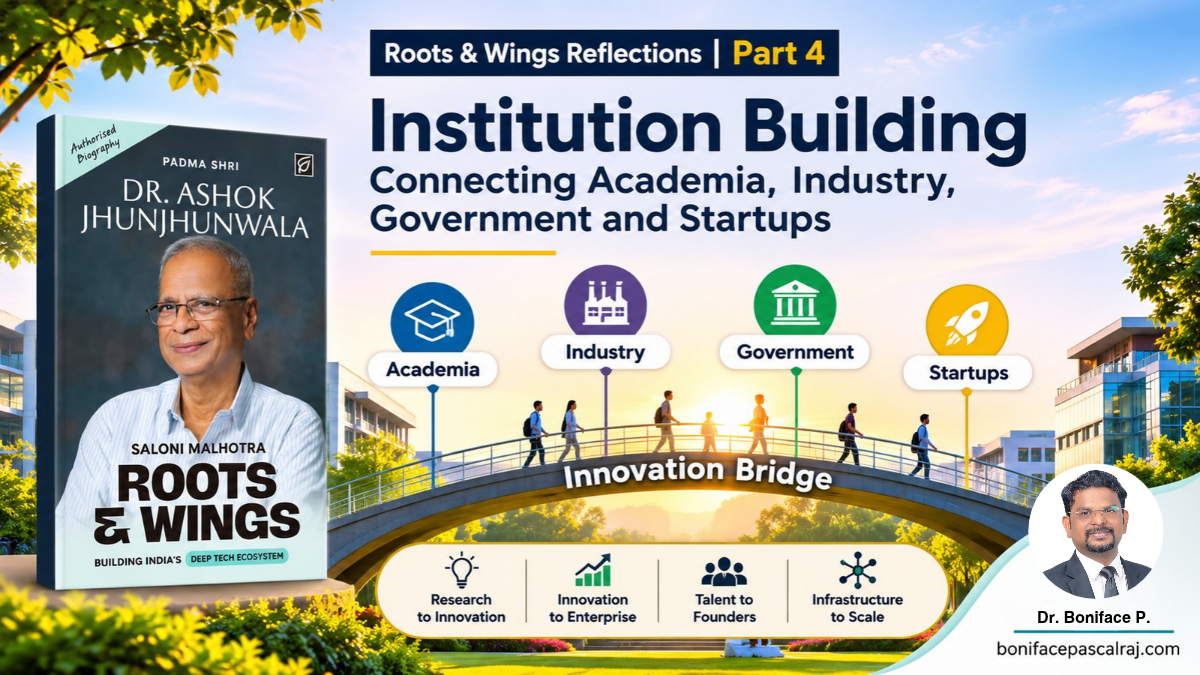
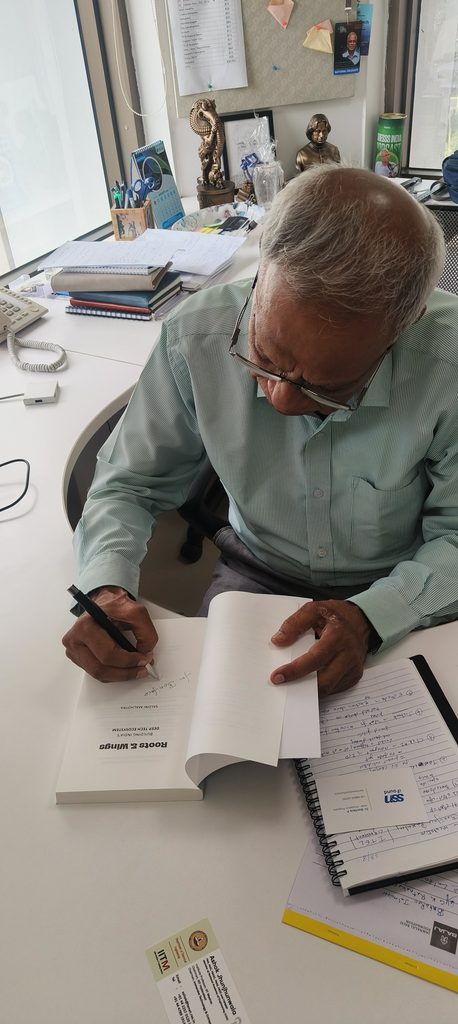
This is Part 4 of a six-part personal reflection series inspired by Roots & Wings: Building India’s Deep Tech Ecosystem, the authorised biography of Prof. Ashok Jhunjhunwala. These are reflections on the ideas that resonated with me and the connections I see with my own journey.
19. Industrial R&D: From Roots to Wings
What Prof. Ashok’s experience made me notice Prof. Ashok’s reflections on creating the infrastructure needed for academia to work with industry strongly resonated with me. Infrastructure cannot remain frozen while the industrial landscape changes. Academic innovation needs roots in knowledge and research, but it also needs wings to move into industry, markets and applications.
What resonated with me I see this as a central challenge in the innovation ecosystem. Universities have enormous knowledge and technical capability. Industry has real problems, customers and implementation environments. Startups can sometimes move faster between the two. The opportunity is to create bridges that allow these strengths to work together rather than remain in separate worlds.
What it means for founders and the ecosystem The roots-and-wings metaphor is powerful for me. Research gives an idea its roots. Infrastructure, industry engagement, entrepreneurs, funding and markets give it wings. Without roots, there may be no depth. Without wings, the work may never travel far enough to create impact.
20. Government Approval
What Prof. Ashok’s experience made me notice The book also reminded me how much patience innovation sometimes requires when government approvals, sanctions and institutional processes are involved. Even senior corporate leaders continue to speak about such friction despite improvements in the broader ease-of-doing-business environment.
What resonated with me I have seen this from the ecosystem side as well. Government can sometimes feel slow when a founder is working against a startup clock. But I have also come to appreciate that once a meaningful relationship with the government is established, it can open doors to opportunities that would otherwise be difficult to access.
What it means for founders and the ecosystem Government is not just a regulator. Depending on the context, it can be a facilitator, customer, policymaker, funding partner, infrastructure provider or ecosystem enabler. For founders and incubators, the lesson is not simply to complain about bureaucracy. It is to understand how the system works, build credible relationships and identify where government can genuinely accelerate outcomes.
21. Autonomy
What Prof. Ashok’s experience made me notice One of the institutional lessons I took from the book is the importance of autonomy for innovation and incubation functions. Many institutions have realised that innovation requires a different operating rhythm from a conventional academic department.
What resonated with me This also made me think about Prof. Ashok’s willingness to put a demanding process in front of his teams. Autonomy does not mean an absence of expectations. It means having enough freedom to experiment, move quickly, engage industry and make decisions while remaining accountable for outcomes.
What it means for founders and the ecosystem Innovation and incubation need speed, experimentation and an entrepreneurial operating rhythm. If every decision has to travel through layers designed for a different purpose, the innovation function can lose its responsiveness. At the same time, freedom without responsibility is simply disorder. My takeaway is innovation needs freedom, but freedom needs responsibility.
22. People vs Process
What Prof. Ashok’s experience made me notice The book’s discussion of people versus process, and later the reminder about building something that can last beyond one person, made me think about a tension I see regularly in organisations. Processes matter, but people execute them. Great people can compensate for weak processes for a while, but institutions cannot depend indefinitely on one-person heroics.
What resonated with me My own view is that people build processes, and good processes then empower people. This is why I have written about the power of process in startup success, about whether startup co-founders need to understand the technical process, and about moving execution from idea to reality.
What it means for founders and the ecosystem An institution becomes stronger when its knowledge is transferable. If everything depends on one individual, the institution may look successful while that person is present but become fragile when the person leaves. The goal should be to create people, processes and culture that reinforce each other. My reflections on the power of process in startup success
23. Not Just Real Estate
What Prof. Ashok’s experience made me notice Prof. Ashok’s point that a research park should not become merely a real-estate proposition is important. Occupants should contribute to an innovation environment, and continued participation should have a connection to the value they create within that environment.
What resonated with me This resonated strongly with how I think about incubation spaces. Physical infrastructure is necessary, but it is not the purpose. A building full of companies does not automatically create an innovation ecosystem. The value comes from interaction, mentoring, pilots, knowledge sharing, funding access, talent, research and the movement of ideas.
What it means for founders and the ecosystem For me, the deeper principle is purpose and accountability. If an organisation occupies innovation infrastructure, it should contribute to the innovation ecosystem in some meaningful way. The question should not only be ‘How many companies are here?’ but also ‘What is happening because they are here?’
What I Am Taking Away
Institution building is slower and more complex than startup building because the objective is not one company’s success. It is to create conditions in which many companies, researchers, students and industries can create value. Roots, wings, government relationships, autonomy, people, process and purposeful infrastructure are all part of that architecture.
About the Book
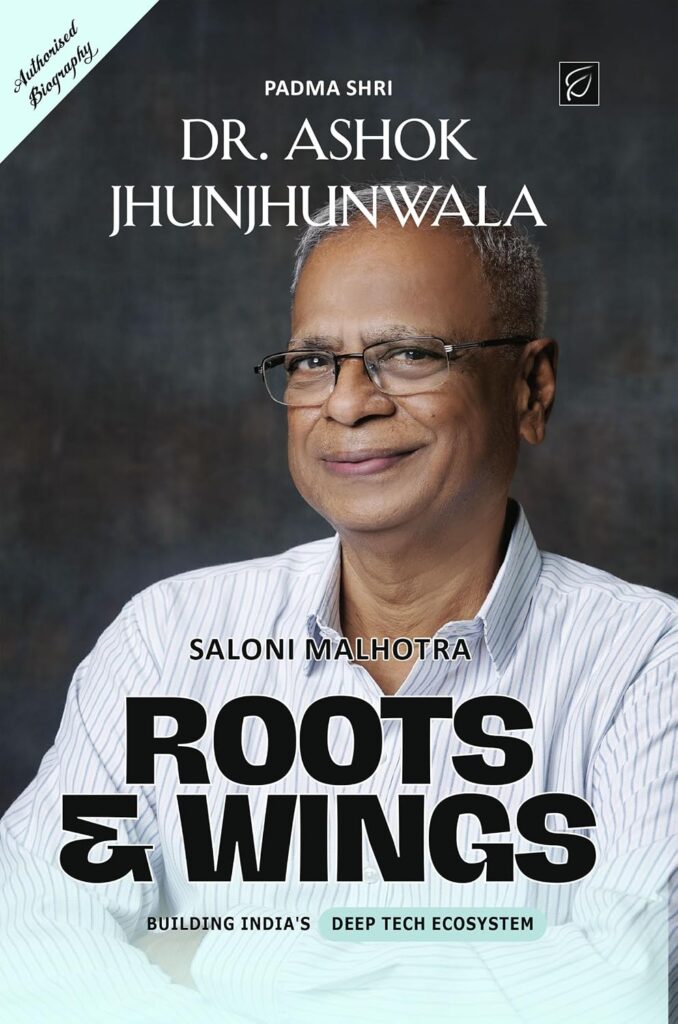
Roots & Wings: Building India’s Deep Tech Ecosystem is the authorised biography of Prof. Ashok Jhunjhunwala. I approached the book less as a conventional biography and more as a source of questions about leadership, innovation, entrepreneurship, and institution building.
This series is therefore not intended to be a book review. It is a personal reflection on the ideas that stayed with me and the way they connect with my own entrepreneurial and incubation experiences.
If you would like to explore the book itself, you can find it on Amazon.