


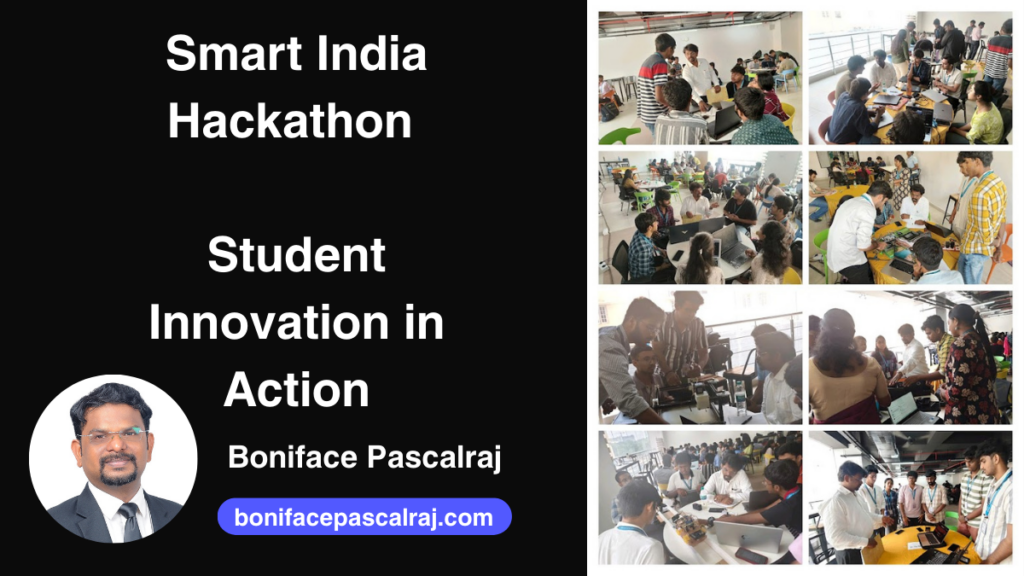
One of the most rewarding aspects of working in the startup and innovation ecosystem is engaging with young minds at the very beginning of their entrepreneurial journey.
Recently, I had the opportunity to participate as an evaluator at the Smart India Hackathon Internal Evaluation, hosted by the SRM Innovation and Incubation Centre at SRM IST, Chennai. The event brought together passionate student teams who were building prototypes aimed at solving real-world problems through technology and innovation.
Energy, Curiosity, and Problem-Solving in Action
Interacting with the student teams was both inspiring and encouraging. Their enthusiasm, curiosity, and willingness to experiment stood out clearly. Many teams had moved beyond just ideas and were already working on functional prototypes, attempting to translate problem statements into practical solutions.
What impressed me most was their intent to address real, contextual problems, rather than building solutions in isolation. This mindset is crucial. Innovation is not just about technology. It is about relevance, usability, and impact.
Evaluating these projects offered valuable insights into how students think, collaborate, and iterate under constraints. It also reinforced a belief I strongly hold. Exposure to structured innovation platforms early on can significantly shape how students approach entrepreneurship later in life.
The Role of Institutions in Fostering Entrepreneurship
Beyond the student interactions, I also had meaningful conversations with the leadership at the SRM Directorate of Entrepreneurship and Innovation. It was a pleasure connecting with Dr. Shantanu Patil (Director), Dr. Ananth Kumar (Associate Director), and Dr. Ramesh Krishnamoorthy (Innovation Officer).
Institutions play a critical role in building the foundation for student entrepreneurship. When academic environments actively encourage experimentation, interdisciplinary thinking, and problem-solving, students gain the confidence to explore entrepreneurship as a serious career path.
Strengthening collaboration between incubators, innovation centres, and academic institutions is essential if we want to build a robust pipeline of future founders and innovators.
Why Such Platforms Matter
Events like the Smart India Hackathon do more than identify winning teams. They:
- Expose students to real-world problem statements
- Encourage teamwork and rapid iteration
- Build confidence in presenting and defending ideas
- Create early awareness of entrepreneurship and innovation pathways
For many students, this becomes the first step towards thinking beyond classrooms and examinations, and towards building solutions that matter.
Closing Thoughts
Engaging with student innovators is a reminder of why ecosystem-building efforts are so important. With the right guidance, mentoring, and platforms, today’s students can become tomorrow’s founders, problem-solvers, and leaders.
Grateful for the opportunity to be part of this evaluation process and to collaborate with institutions that are actively nurturing innovation at the grassroots level.